Skip to content

The Process Everyone Understands Differently

But ask Sales, Operations, Finance and Quality how the process actually works, and you may receive four different answers. Each department sees the process from its own perspective. One team considers a handover complete when information has been submitted. The next expects it to have been checked and approved. Decisions that appear obvious to one […]

The Project Was Green. Until It Wasn’t.

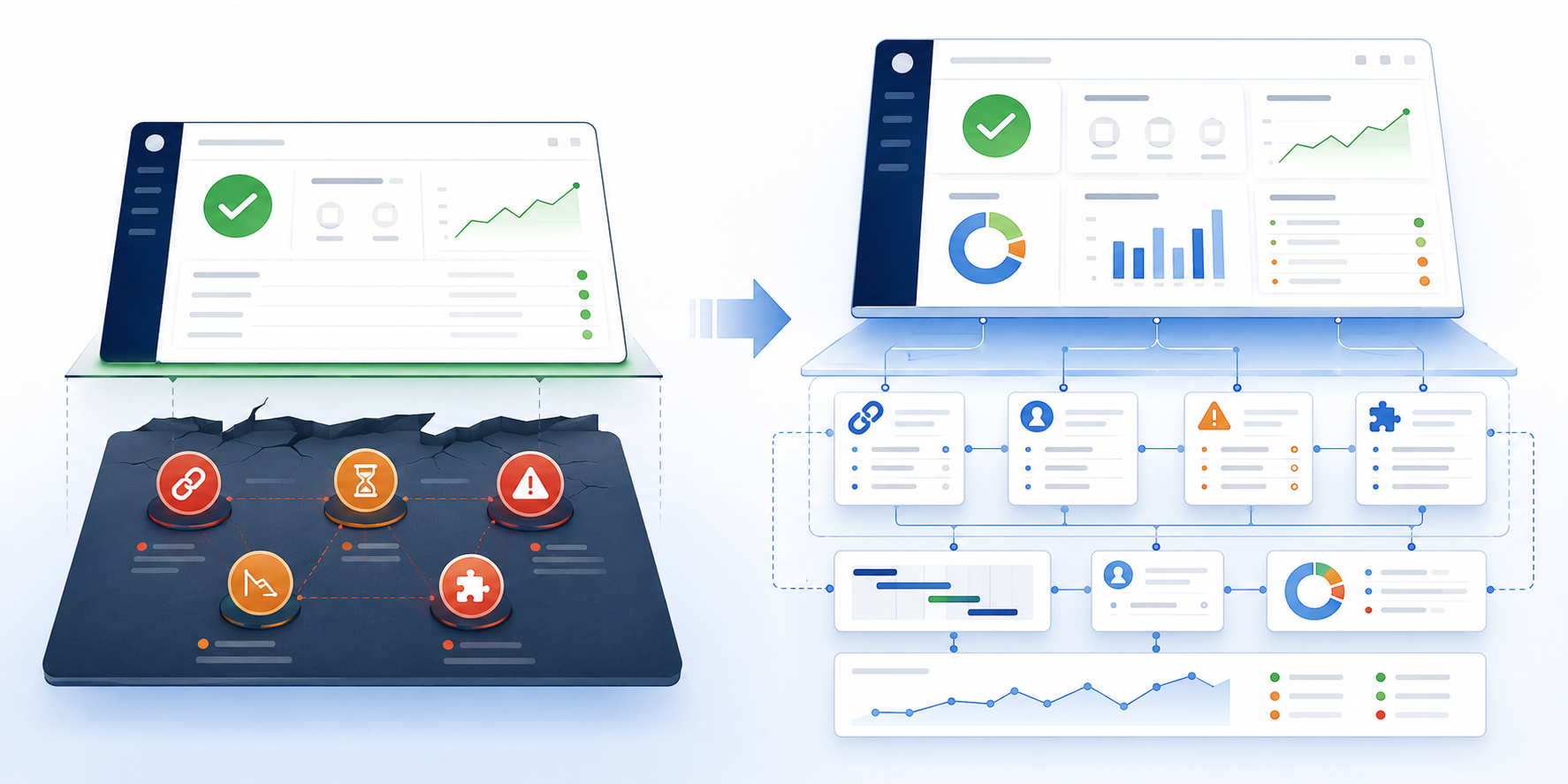
Many projects look healthy for most of their lifecycle. The status report says green, the steering committee sees progress, and the project plan is updated. There may be open points, delayed decisions or known risks, but nothing seems critical enough to change the overall picture – until suddenly, it does. A missed milestone becomes visible. […]

The Factory Is Connected. Is the Organization?

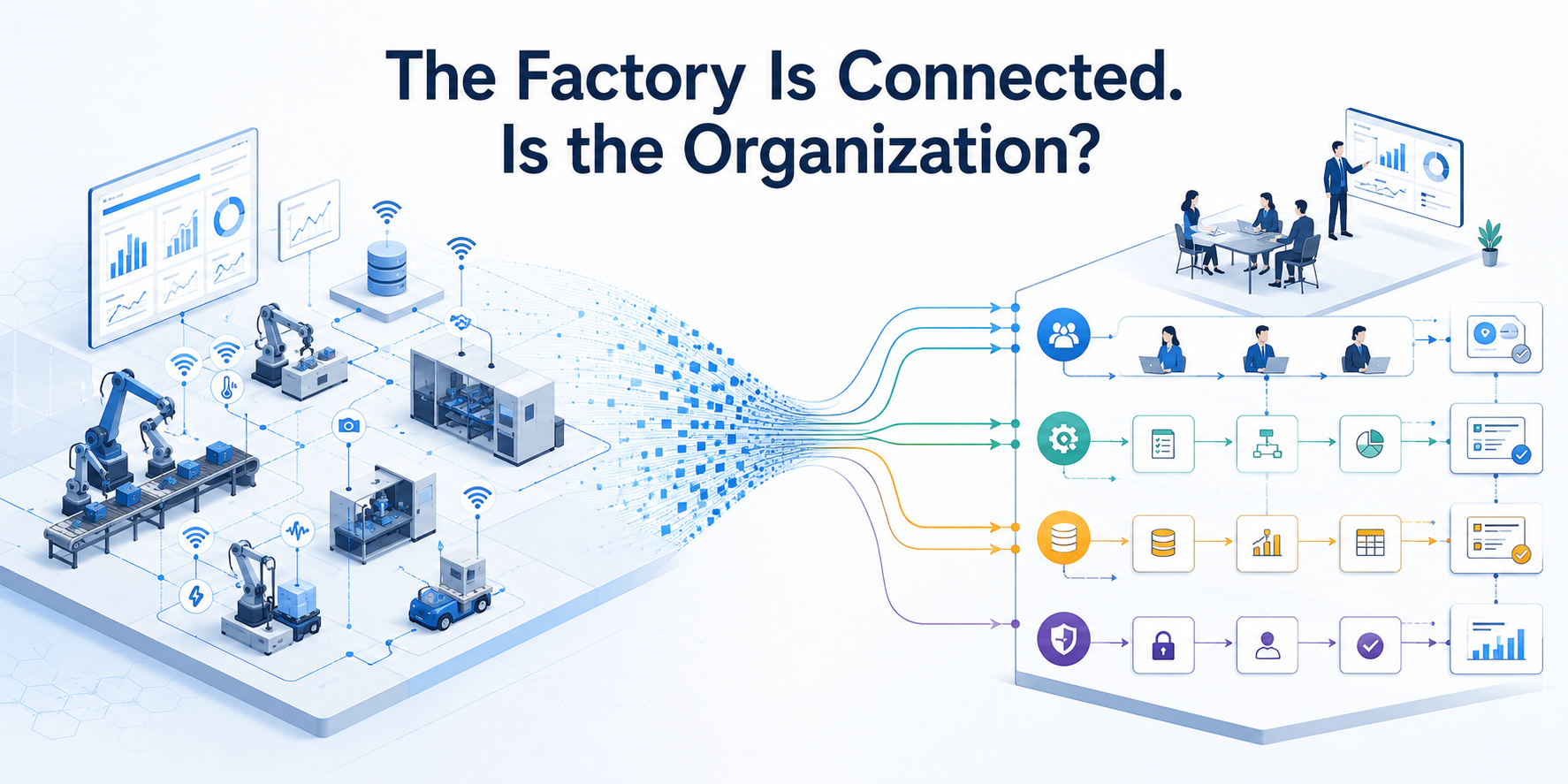
Industry 4.0 has changed the factory: Machines are connected. Production data is available in real time. Sensors, systems and automation create a level of transparency that would have been difficult to imagine only a few years ago. But many organizations still coordinate their work in a very different way. Responsibilities are spread across departments. Decisions […]

When Every Project Is Priority One

Every initiative has a convincing rationale: Individually, every project appears important. Collectively, they require more people, time and specialist expertise than the organisation can provide. Nevertheless, no project is stopped or deferred. The consequences soon become visible: These may appear to be project-level delivery problems. In reality, the organisation has approved more work than it […]

Why Project Reporting Is Often Already Outdated When Management Sees It

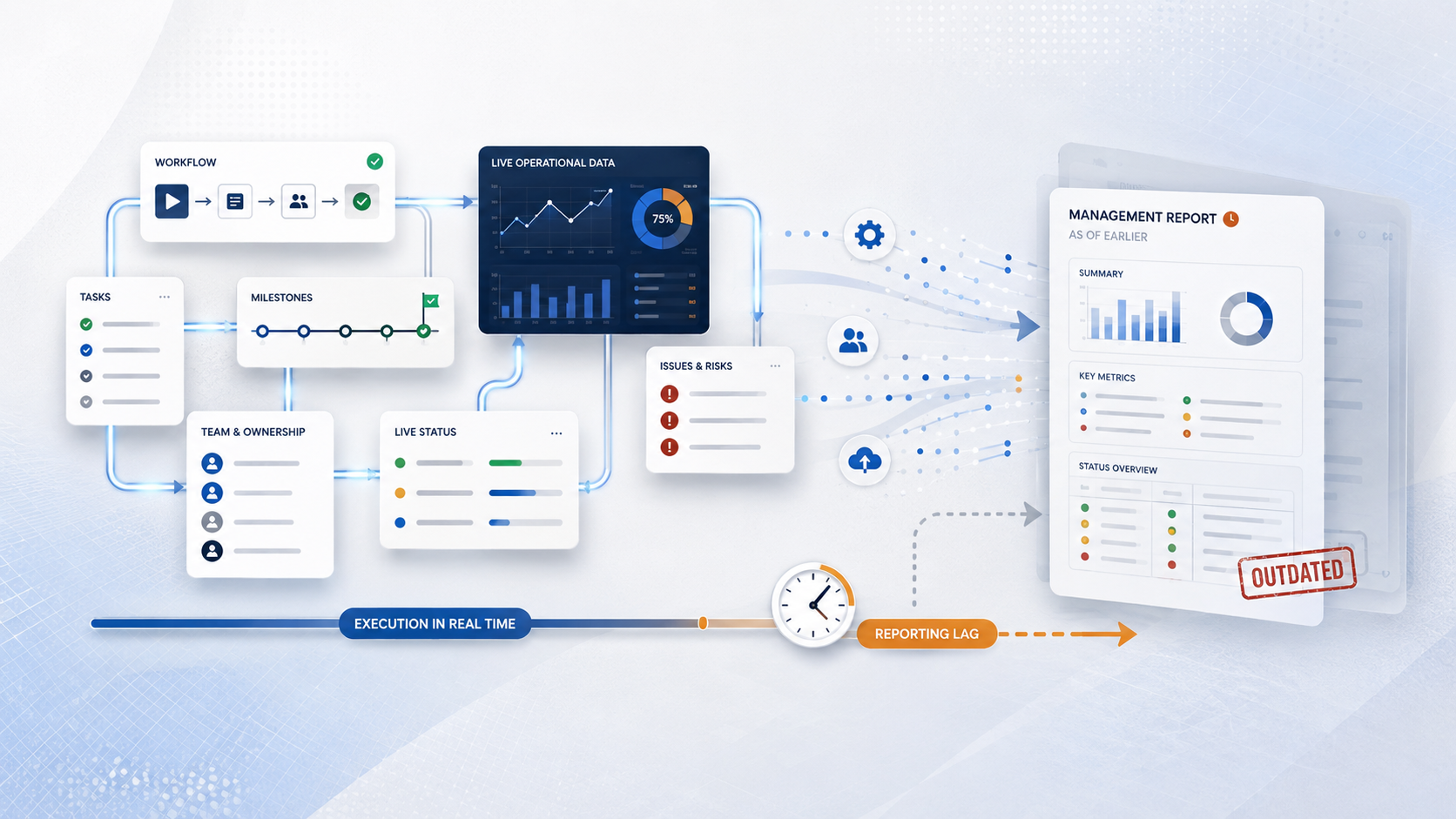
Project reporting is meant to create transparency. In practice, however, it often describes what has already happened rather than what is happening now. The reason is simple: Reporting is frequently disconnected from execution. Teams update their operational systems, project managers collect status information, comments are requested, figures are reconciled and presentations are prepared. By the […]

Governance Should Guide Work – Not Create More Administration

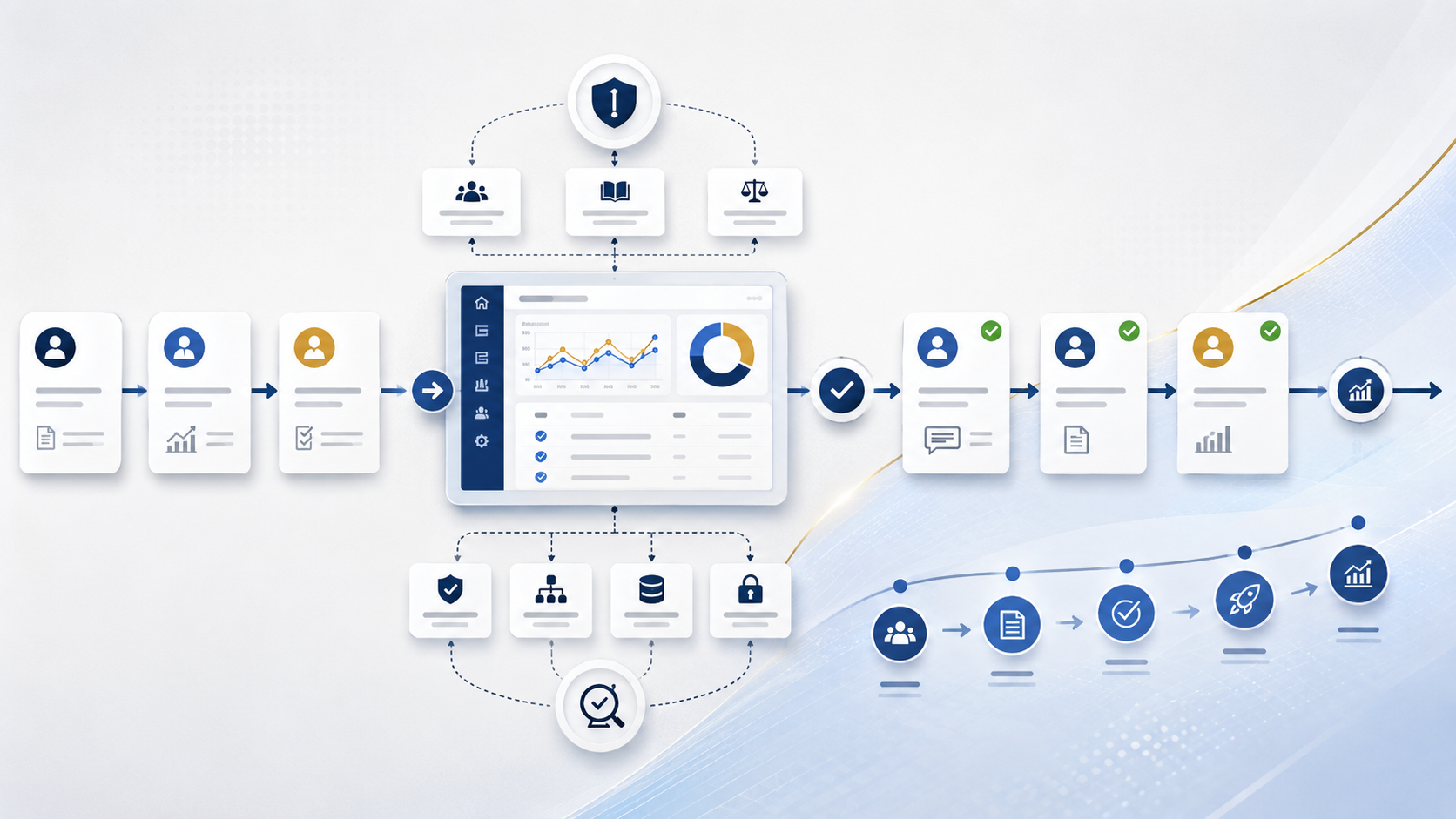
Governance is meant to create clarity, consistency and accountability. But in many organisations, it is experienced as an additional layer of templates, approvals, reviews and reporting. The problem is rarely governance itself, but the way governance is implemented. When standards, responsibilities and approval rules exist separately from daily execution, people have to remember what applies, […]

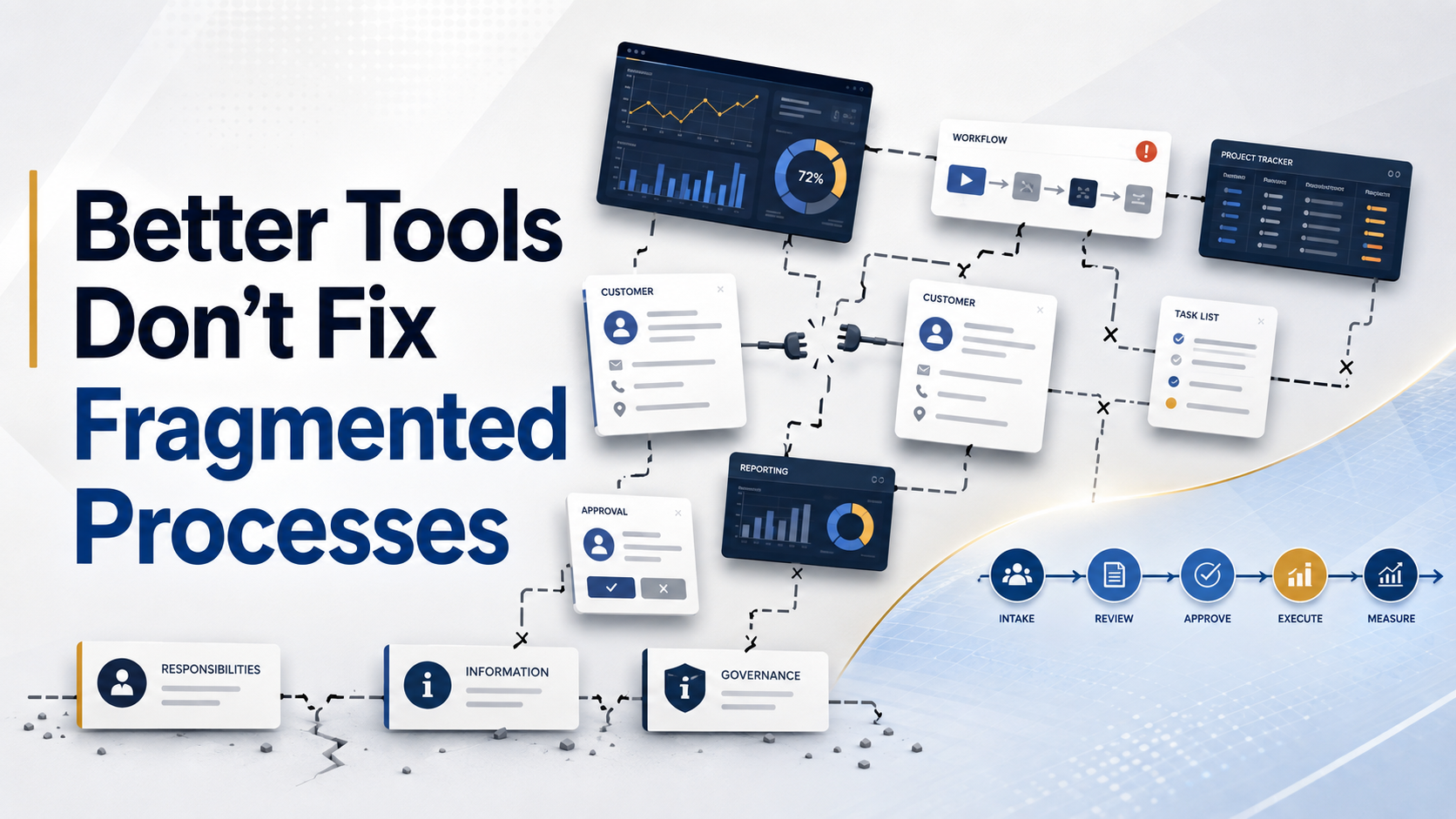
Better Tools Don’t Fix Fragmented Processes

When execution becomes difficult, organisations often look for another tool: A new project-management system, reporting solution, dashboard or collaboration platform. Sometimes that helps. But often the underlying problem is not the tool itself. It is the fragmentation around it. Processes are documented in one place, responsibilities discussed somewhere else, project information spread across several systems […]