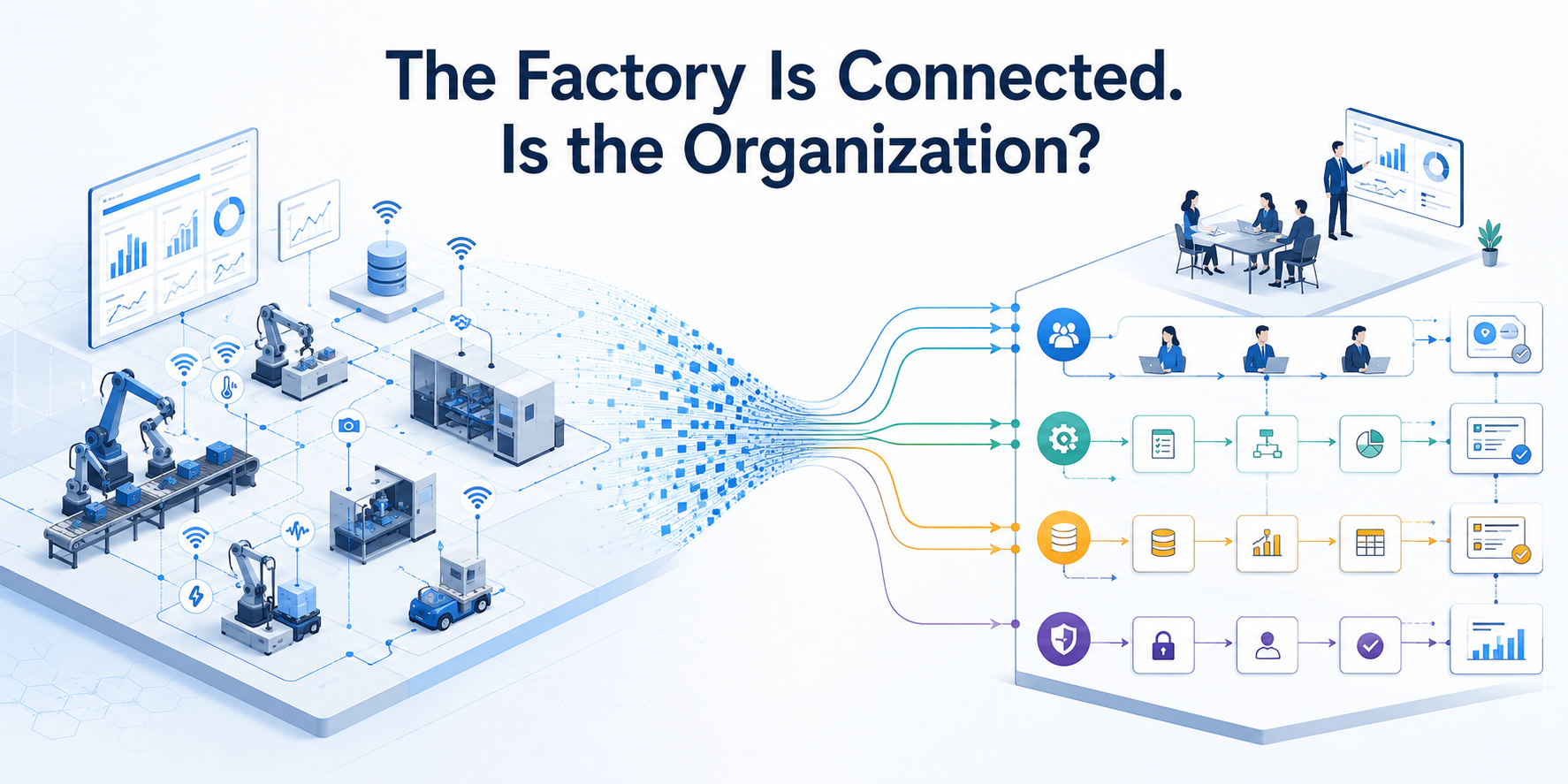
Industry 4.0 has changed the factory: Machines are connected. Production data is available in real time. Sensors, systems and automation create a level of transparency that would have been difficult to imagine only a few years ago. But many organizations still coordinate their work in a very different way.
Responsibilities are spread across departments. Decisions move through emails, meetings and informal updates. Project information lives in separate tools. Processes are documented somewhere, but executed somewhere else. Management visibility often depends on manual reporting rather than on the actual state of execution.
The result is a growing gap: The production environment becomes connected and data-driven, while the organization around it remains fragmented.
This matters because efficiency today is no longer created by technology alone. It is created by the ability to turn information into coordinated action.
A connected factory can show what is happening. But a connected organization can decide what needs to happen next, who is responsible, which process applies, which risks are emerging and whether execution is still aligned with the intended outcome. This is where structured, integrated processes become essential.
Organizations need more than individual tools. They need a shared execution environment where processes, responsibilities, information and management visibility come together. A place where operational work is not only documented, but actively guided, tracked and improved.
Aperta supports this transition: The Aperta Platform connects operational processes with responsibilities, data objects, execution logic and management views. It helps organizations move from fragmented coordination to structured execution. Teams can work within defined processes, while managers gain visibility into progress, status, risks and performance.
The objective is not to add another system to an already crowded landscape, but to create a clearer operating model: One in which people, processes and information are connected in the same way modern production environments already are.
Because the next step of Industry 4.0 is not only the connected factory. It is the connected organization.